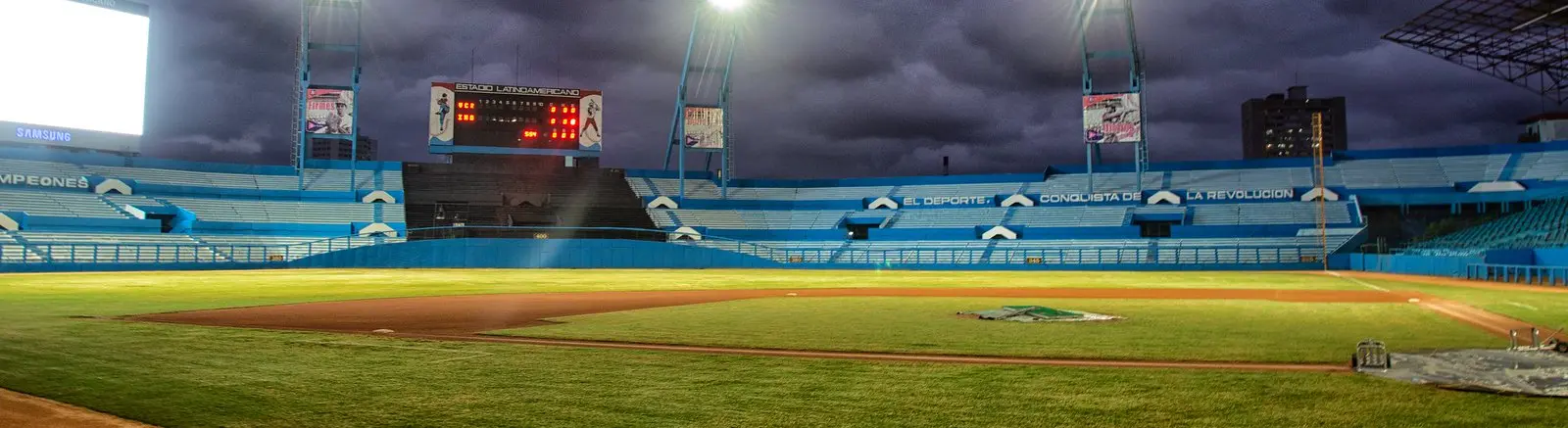


Cuba recently declared baseball a National Cultural Heritage. Already considered the country’s national sport, the designation acknowledges the game’s importance as sport but to the spirit and psyche of Cuba and its people as well. The ceremony was held in Matanzas at The Cradle of Cuban Baseball Palmar de Junco. Palmar de Junco was the site of Cuba’s first organized baseball game in 1874 and is still preserved to this day. I had the good fortune to visit in 2017 and capture some great local baseball action.


Baseball was first popularized in Cuba in the 1860s. American students from abroad and travelling sailors engaged in the game and eventually involved the locals. The acceptance of baseball was as much a rejection of Spanish culture. Cuba was building towards its independence from Spain and thus sought activities and sports that were antithetical to the Spaniards’ traditions. Time heals many wounds and today soccer is one of the fastest growing games in Cuba, Bull Fighting however may never see its time in the sun on the island.
The Cuban baseball talent drain is huge but the fact that Cuba is still producing immense talent is actually astounding. The 2nd biggest issue might be the trap of unintended consequences. In creating an elite funnel for players they have actually alienated much of the youth that might play the game for pure love, which may or may not result in producing national level or national series players but the number of kids playing is dropping, that is a problem. It has also created a scenario where the kids that play are playing in a system instead of the historic advantage Cuba has had which was playing the game all the time with or without structure. I think this funnel has also added to the number of defections, take a youngster that gets identified as a great talent early, the rest of the world is watching now, and they likely haven’t grown up in an environment where playing for country was tops. These identified talents see how many of their countrymen have left for success & money in the states and now more than ever think they can do the same.
Phil Selig, originally posted on Instagram
Havana would eventually become the epicentre for Cuban baseball, but Matanzas has always been a strong outpost. The small stadium is dubbed The Cradle of Cuban Baseball and is still preserved today. Cuban leaders maintain that it is the oldest functioning baseball field on the planet. Matanzas is located roughly a half hours drive outside tourist hotspot Varadero. Visiting Cuban baseball stadiums isn’t always easy due to travel infrastructure issues, however Palmar should be on every baseball tourists to do list. Palmar currently hosts local clubs. Unlike stadiums of the National Series it is actually licensed to sell beer.

The designation comes at a time when Cuba and baseball are both in periods of major transition. The 60th Cuban National Series wrapped up in April of 2021 and the 61st Series wont begin until January of 2022. The Covid-19 virus has done serious damage to the health and economy of Cuba. Stories of top talent leaving the island for opportunities overseas seem to break everyday. The Cuban federation has it’s work cut out for it to keep baseball vibrant in Cuba. Acknowledging that baseball is more than just a game is at least a small step in regaining some of the lost goodwill with the Cuban baseball fan.
In early 2017 I visited Matanzas and truly stumbled upon the stadium while walking through Cuba’s City of Bridges. On a beautiful early January day Cuban juniors were playing. I had the opportunity to capture some of my favorite images from my travels. The schedule of the Matanzas Cocodrilos was flexed during this trip. Thus this was the only baseball I had the chance to see and shoot. Baseball in Cuba generally feels like a throwback to a bygone era. Stepping inside The Cradle of Cuban Baseball is a unique experience. Visiting Palmar de Junco feels like you have found a time machine.


Spotted an error in this article? Let us know and we'll correct it.
